
From casting to gearbox
Everything that has to happen before a lump of cast iron becomes a gearbox. Nine stops in our workshop, shot on a phone between two operations – no studio lighting, but plenty of swarf.
-
 Operation 10
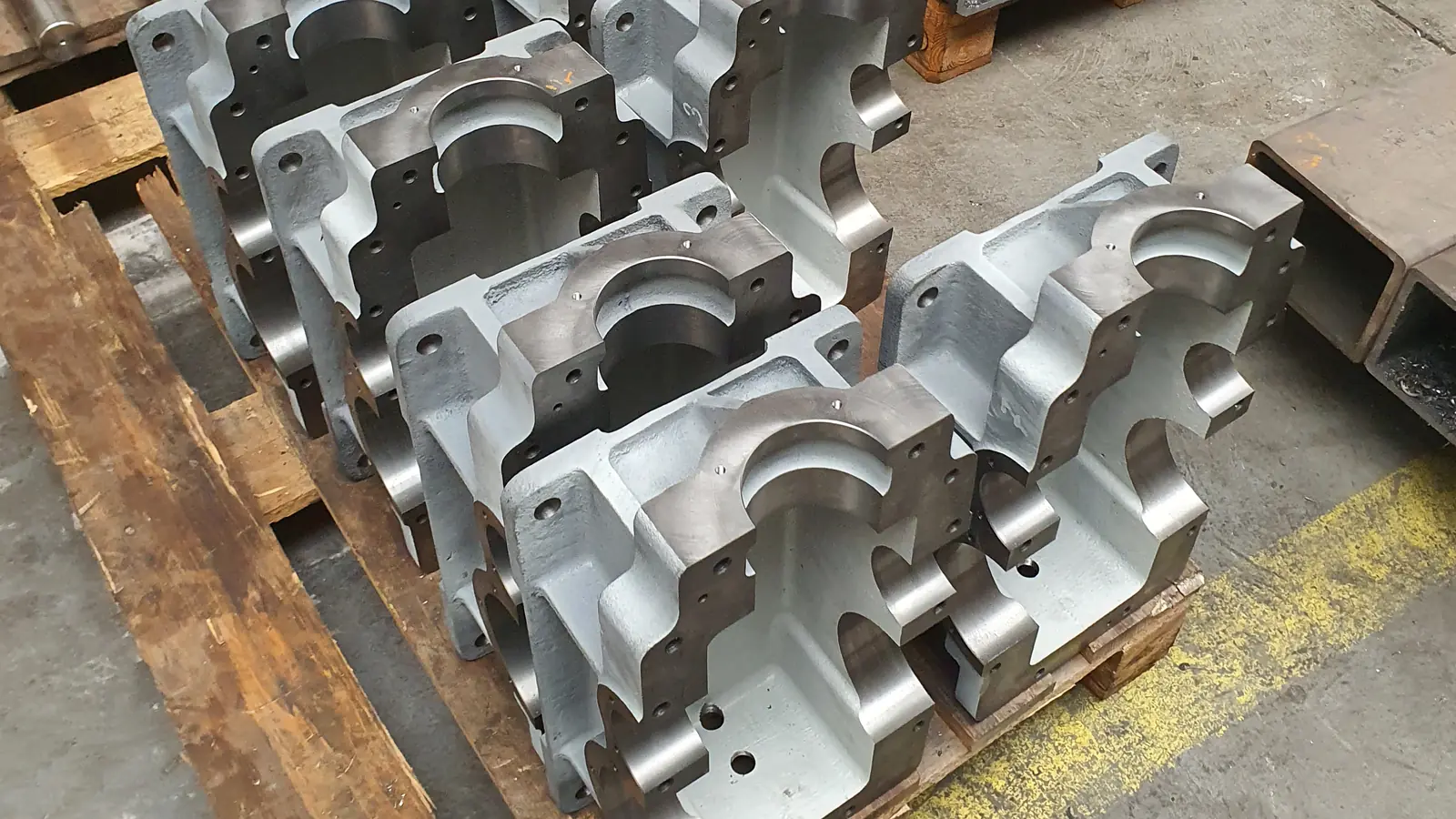
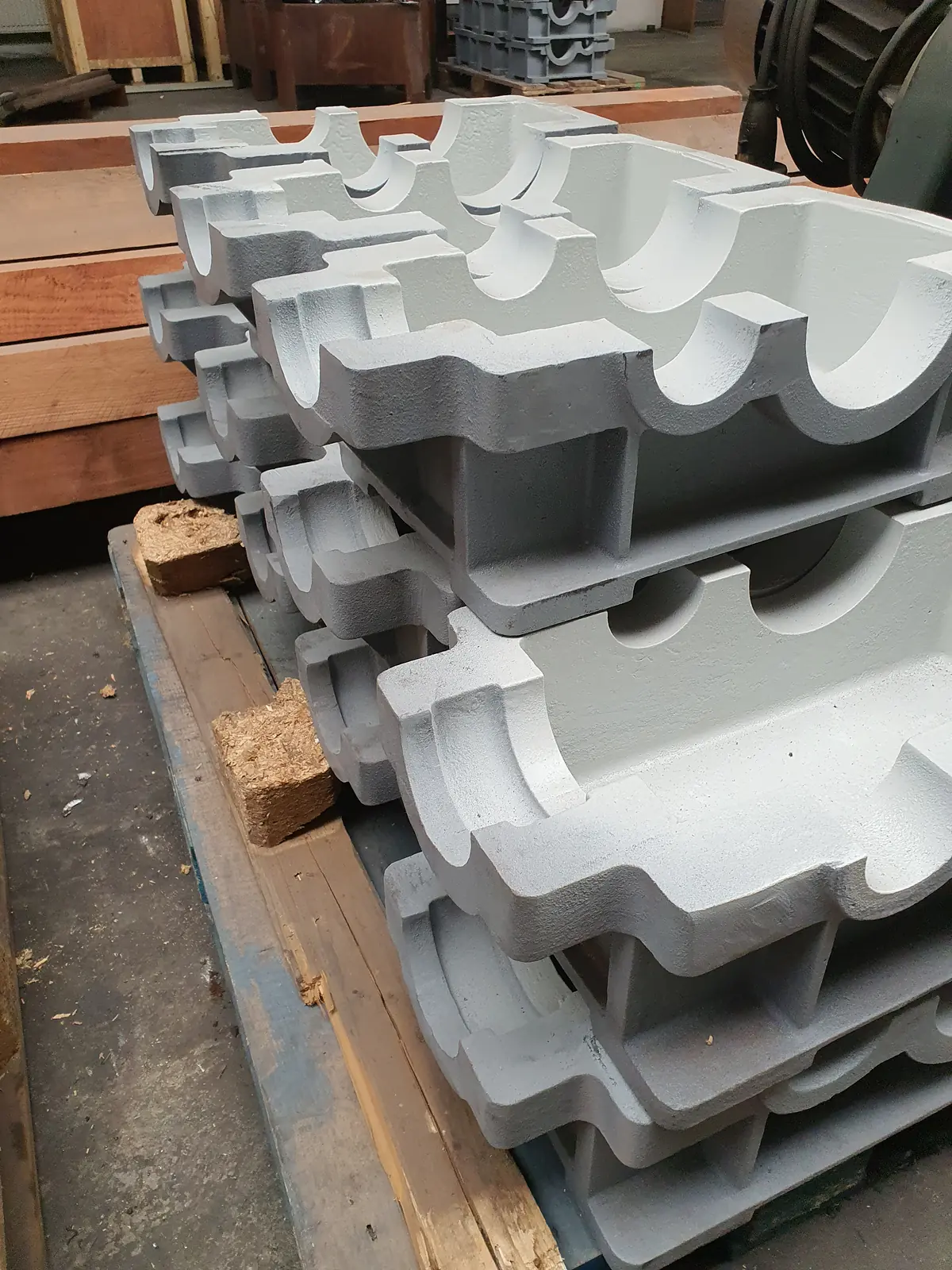
It all starts with a casting
Raw castings in the shape of future housings. They don't have a single precise surface yet and know only two things – how to be heavy and how to wait. We'll teach them the rest.
-
 Operation 20
Every hundredth counts
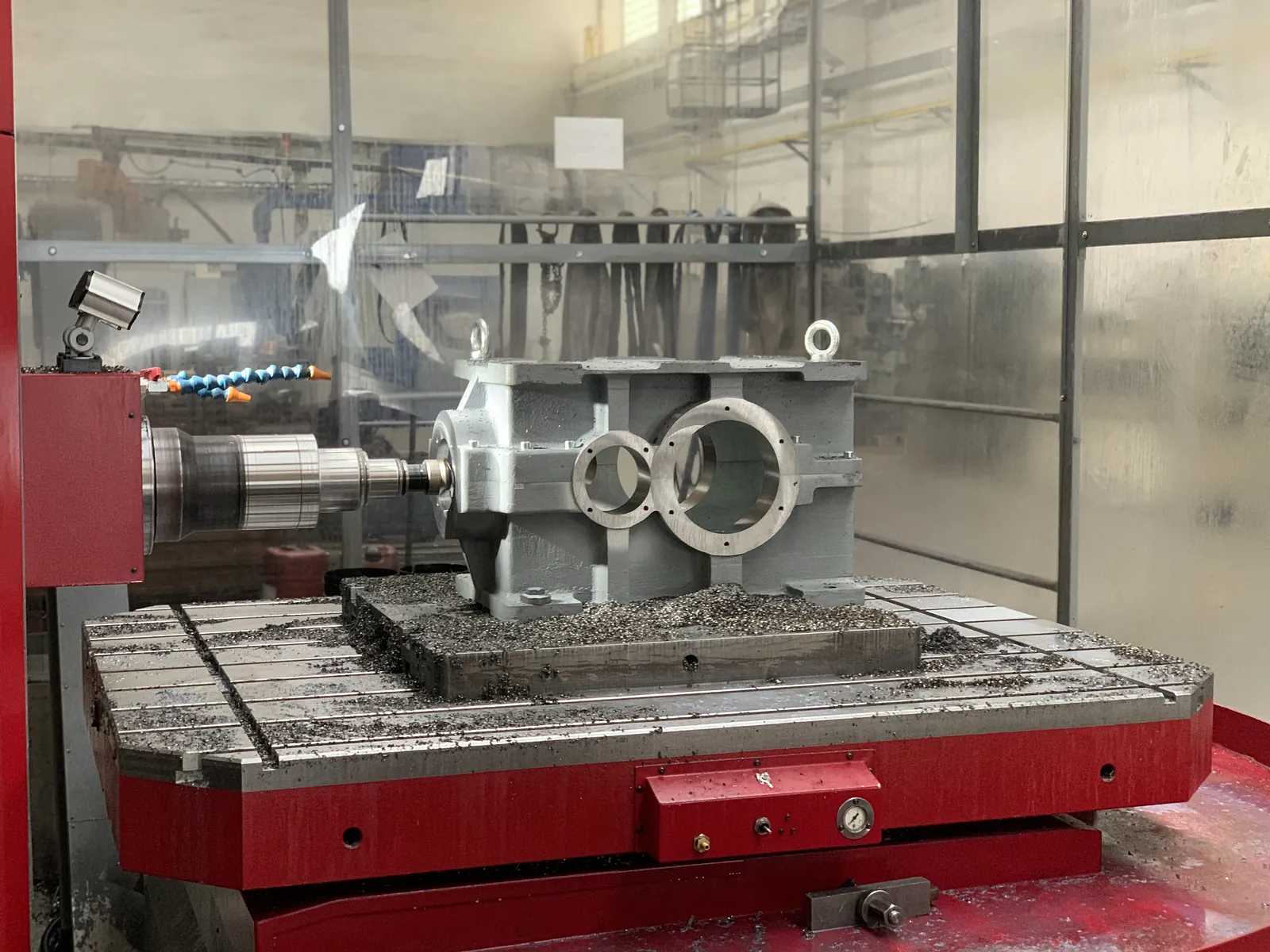
The housing is clamped on the horizontal boring mill and machining begins – faces, bearing bores, holes and threads, in a single set-up wherever possible. Whether it weighs a few kilos or several tonnes, the rule is the same – every hundredth of a millimetre counts. A bearing never keeps a mistake to itself.
Custom machining on the FERMAT boring mill -
 Operation 30
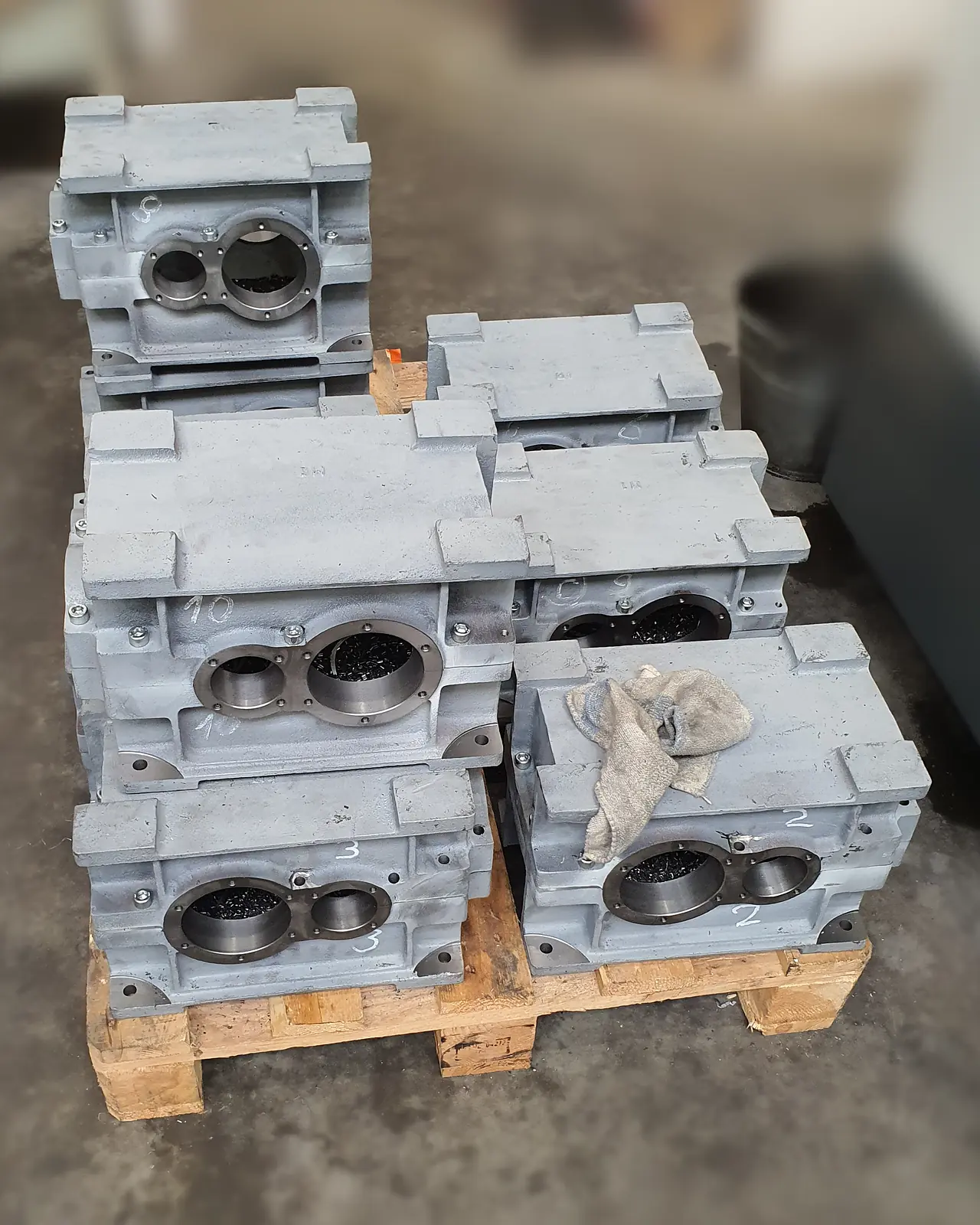
The casting is now a housing
Bearing bores bored, faces machined, threads tapped. The upper and lower halves are machined together, so they carry the same number – they belong together like a pair of socks. Unlike socks, though, they never go missing.
-
No sound – imagine the hum of the hobbing machine. Operation 40The gear gets its teeth
We cut our own gears. The wheel turns while the hob cuts tooth after tooth under a stream of oil. The old rule applies – measure twice, hob once. Metal can be taken off, but never glued back on.
Custom gears -
 Operation 50
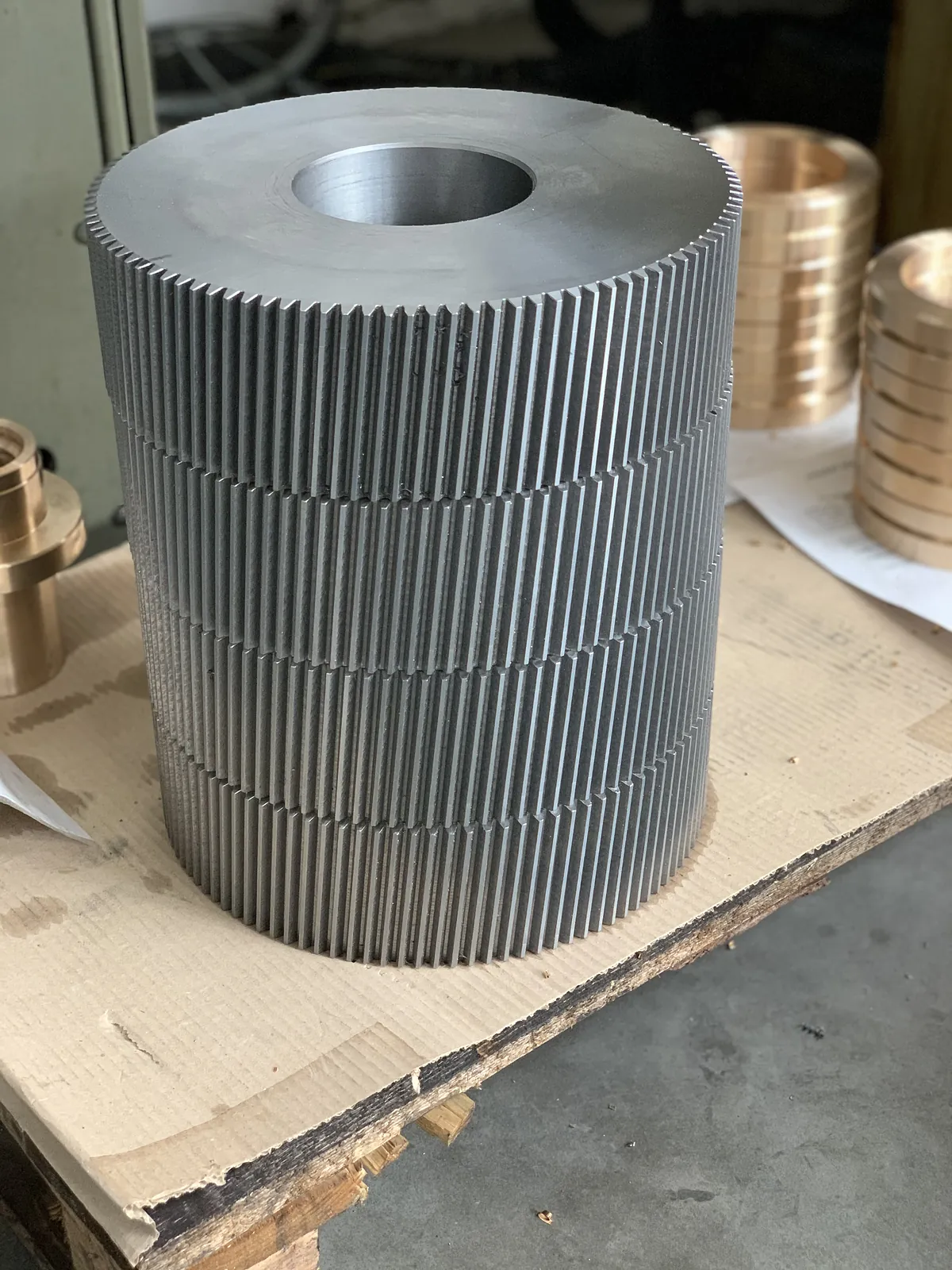
A full set of teeth
Finished spur gears stacked on top of each other. Hundreds of teeth between them, all identical and all in place – a dentist would be out of work here.
-
 Operation 60
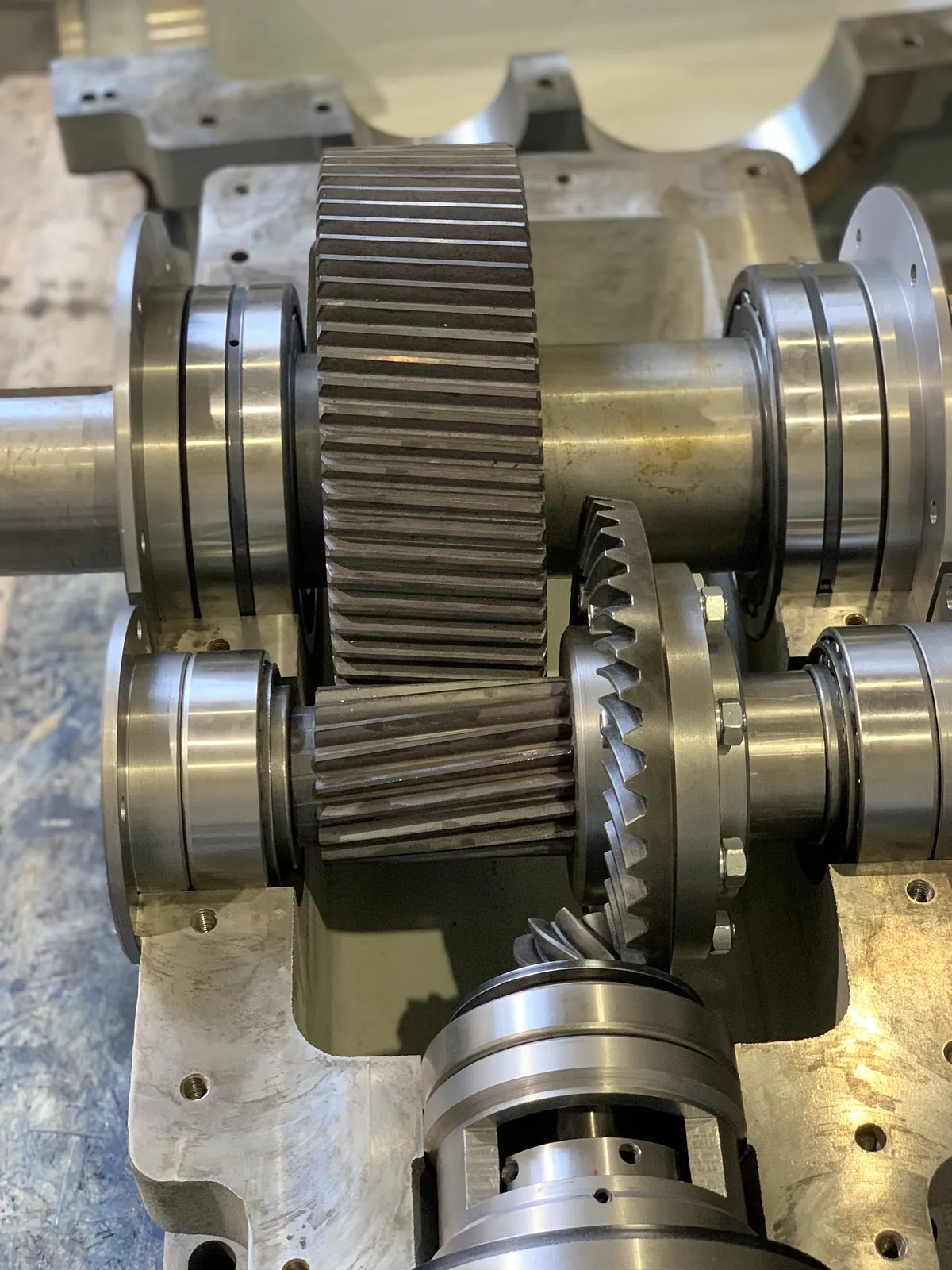
One last look inside
Shafts, bearings, the bevel and the helical gear sets – a bevel-helical gearbox just before the cover goes on. Take a good look, from now on only the oil gets to see this.
Bevel-helical gearboxes -
 Operation 70
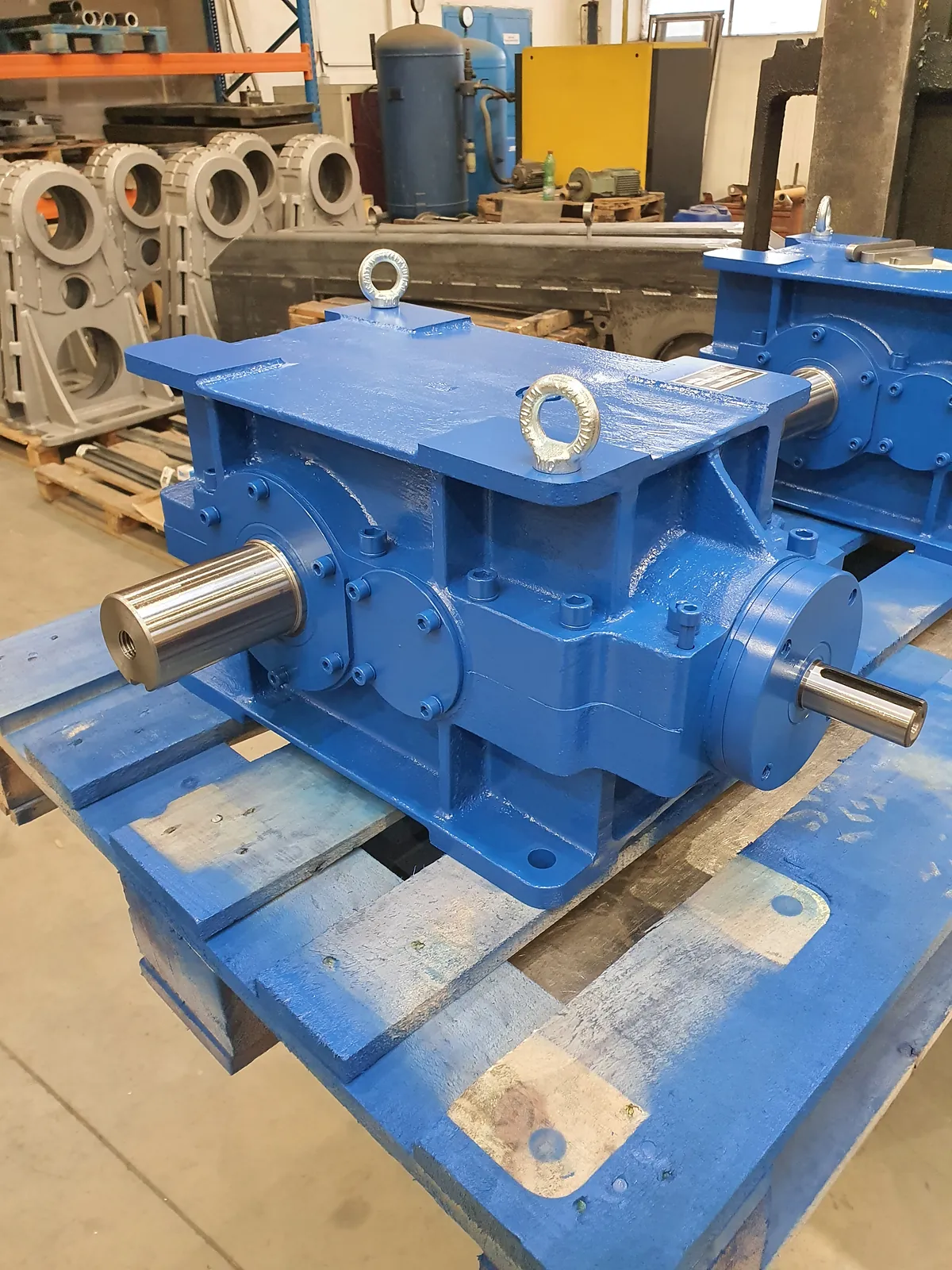
Blue suits it
Paint, lifting eyes, shiny shafts. And look at the background – more cast iron housings are already waiting there. The cycle goes on.
-
 Operation 80
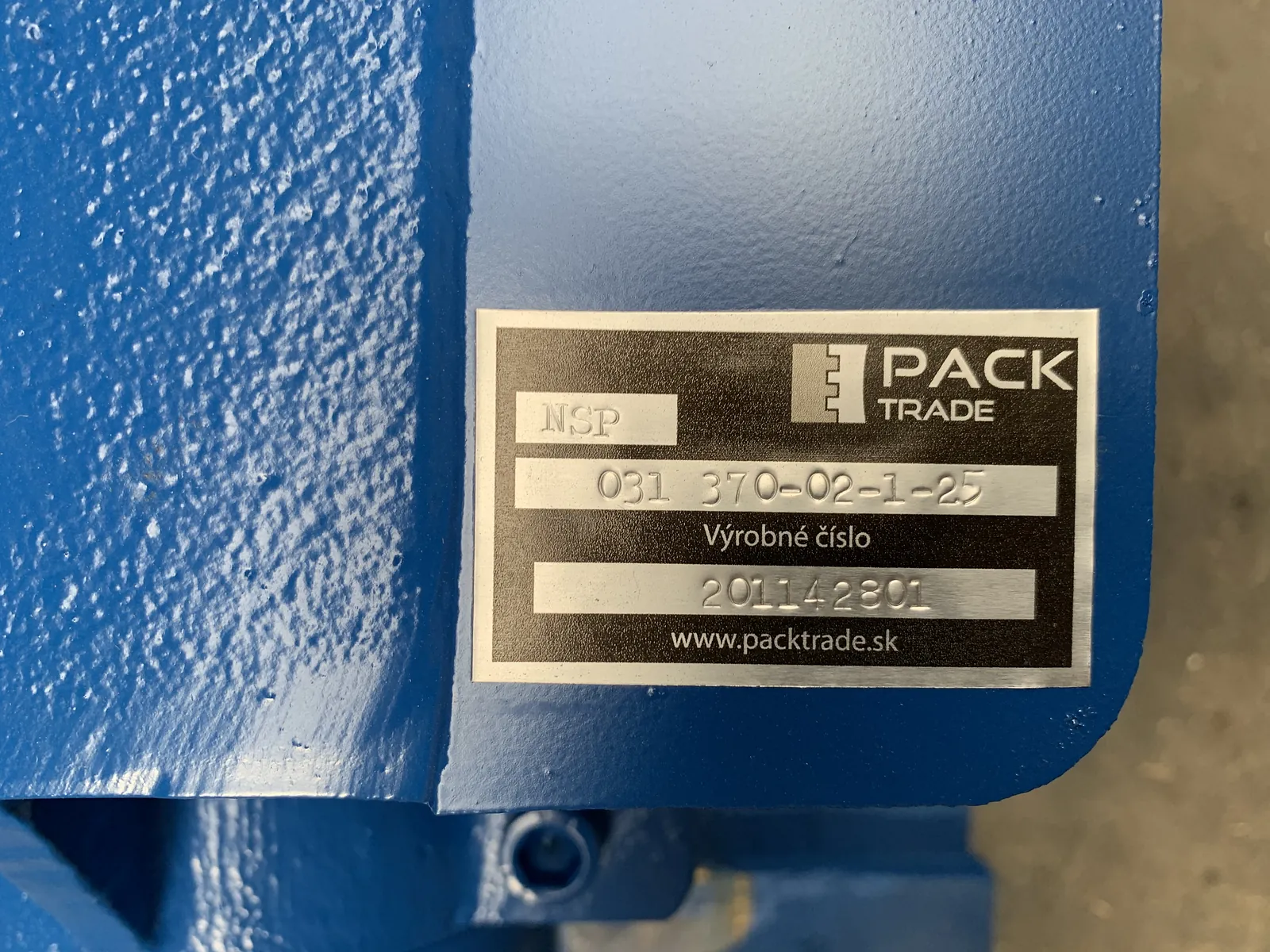
Birth certificate
Type and serial number. Thanks to the nameplate, even thirty years from now we'll know exactly what left the workshop – and we'll be able to make a spare part for it.
Service and spare parts -
 Operation 90
Done. Out it goes.
A pallet, shaft protection and a final check. The gearbox leaves for the customer – and we go back to the start, to the next casting.
Need a gearbox – or just one of its gears?
Send us the drive data, a photo of the nameplate or a drawing of the part. We'll get back to you with a quotation and a realistic delivery date.