
Lifting systems: many points, one movement
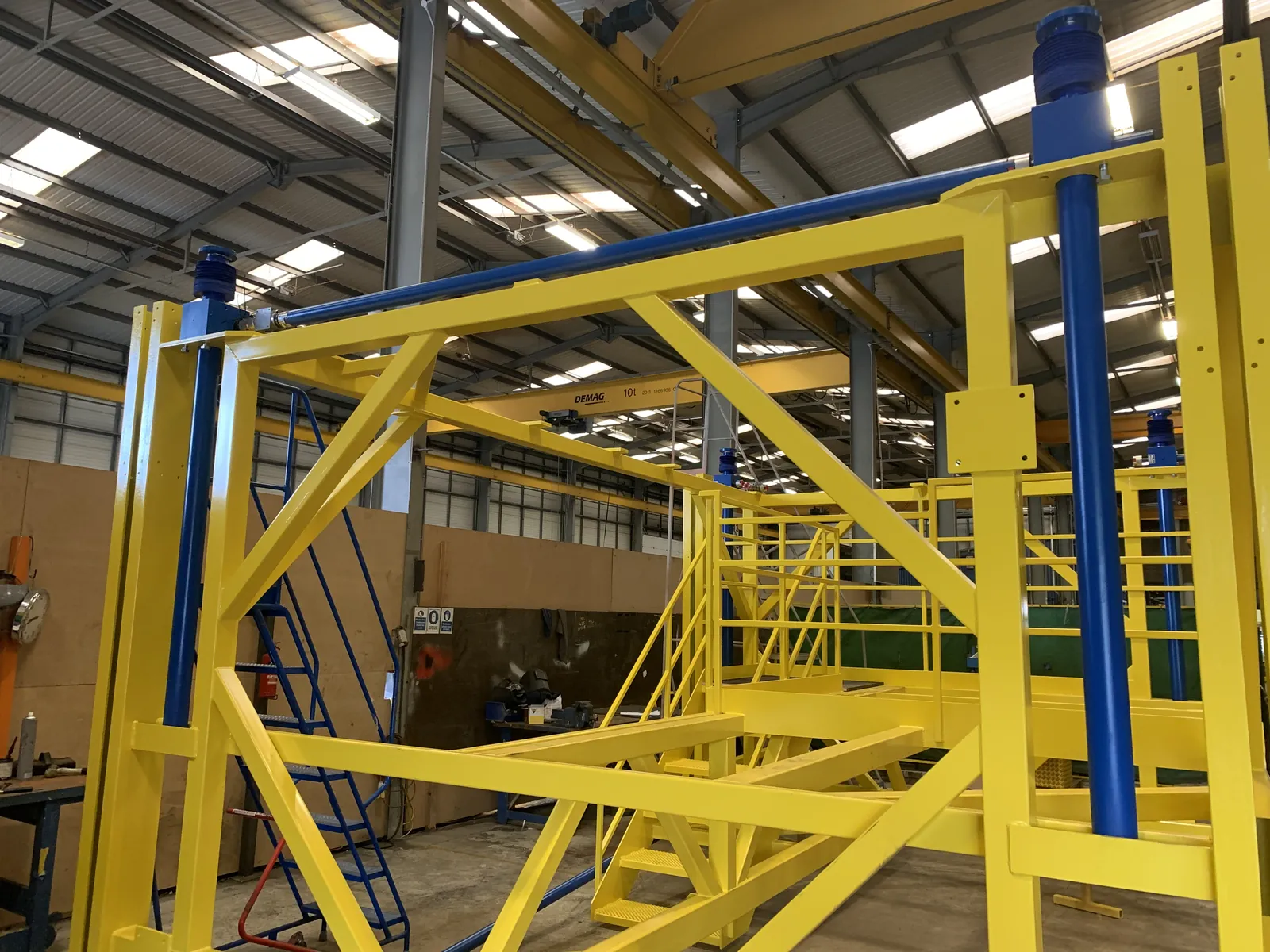
When one screw jack is not enough, two, four or even twelve are linked into one system. A common motor, connecting shafts and bevel gearboxes make sure every point rises by the same amount – even when the load is not evenly distributed.
What the system is made of
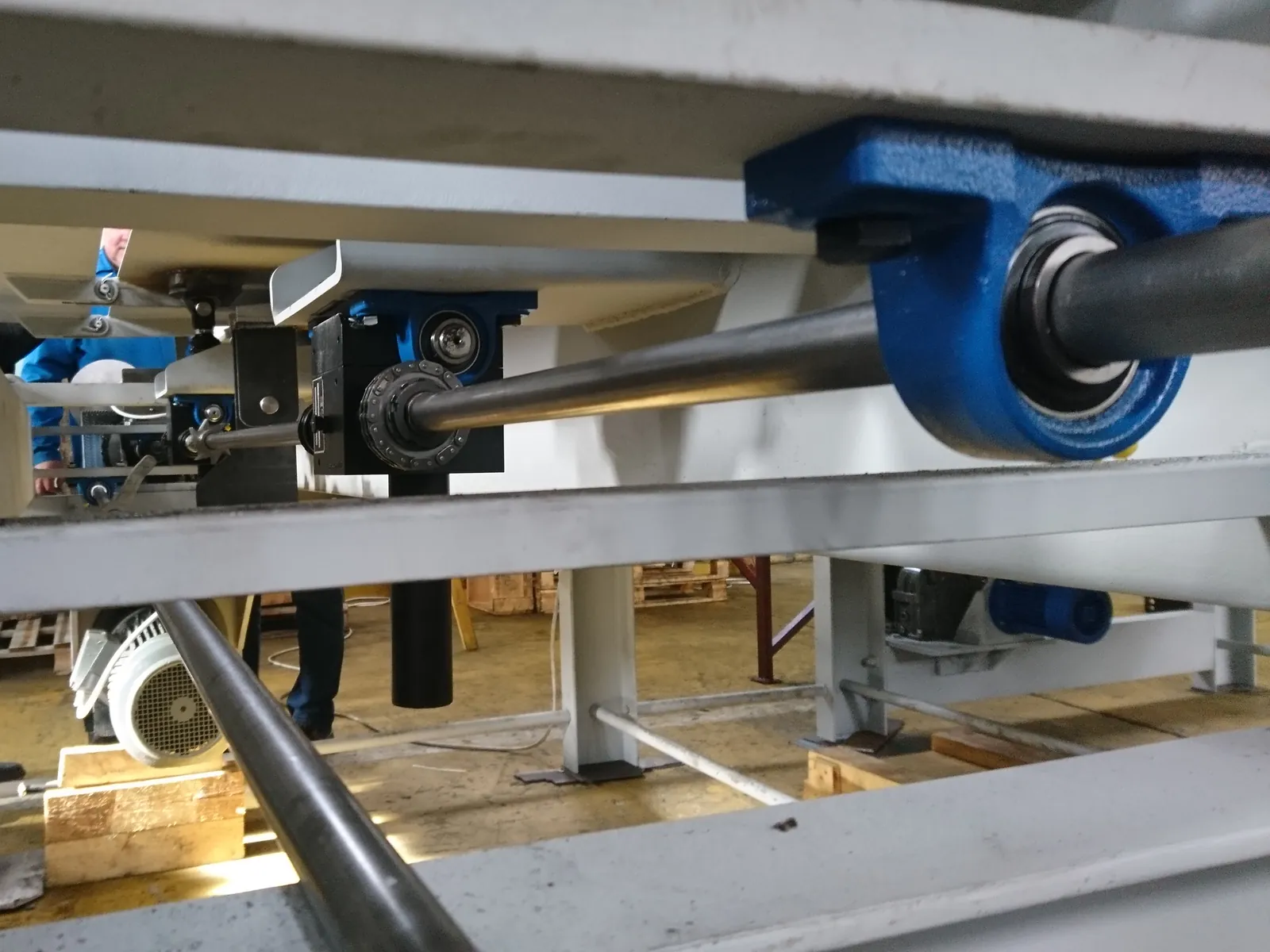
A typical system has one motor driving two to four branches of TMP screw jacks through bevel gearboxes and connecting shafts. Because they are linked mechanically, all jacks turn through the same angle – and so lift by the same distance. No electronics has to keep them in step.
- TMP screw jacks – same size, type and ratio at every point
- Bevel gearboxes – split the drive into branches
- Connecting shafts and couplings – carry the torque between the jacks
- Motor with brake – one for the whole system, next to the most heavily loaded point
- Position sensors – all points move together, so one location is enough
What to watch out for in the design
- Parallelism – the spindles of all jacks must be parallel and the mounting faces square to the guides, otherwise the system can jam.
- Direction of rotation – keep the same direction of rotation in all branches; standard screws are right-hand, left-hand on request.
- Torque – the motor must cover the torque of all jacks plus losses: connecting shafts have an efficiency of about 0.75 to 0.95, bevel gearboxes about 0.9.
- Jacks in series – the first jack also carries the torque for the next ones; check that it stays below the maximum permissible input torque.
- Reaction torque – the screw (type N, VS) or the nut (type RS) must be held against turning by the driven structure.
The formula for the total torque and a layout diagram are on the catalogue page Installation and maintenance. Bevel gearboxes for linked systems are available on request.
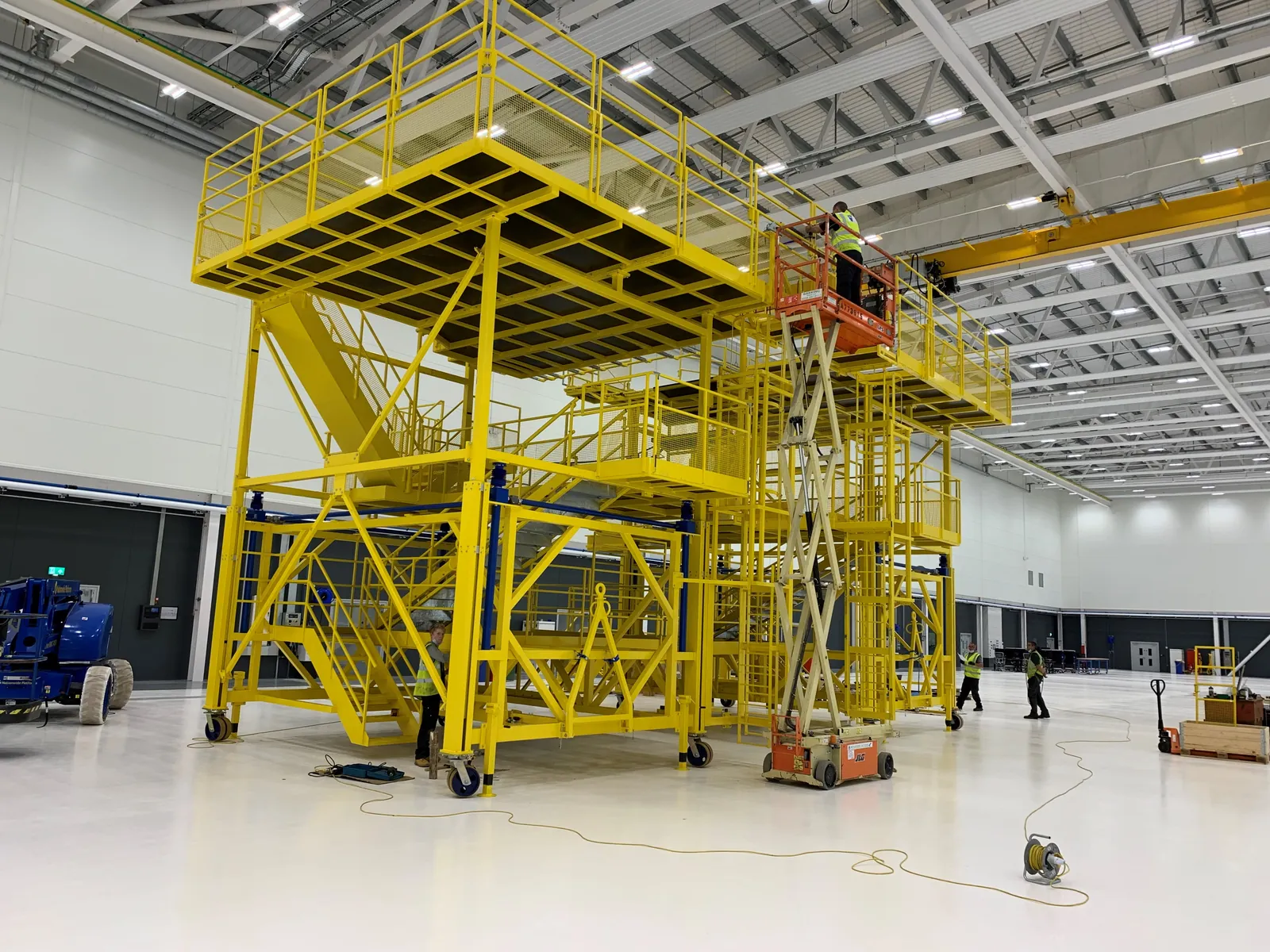
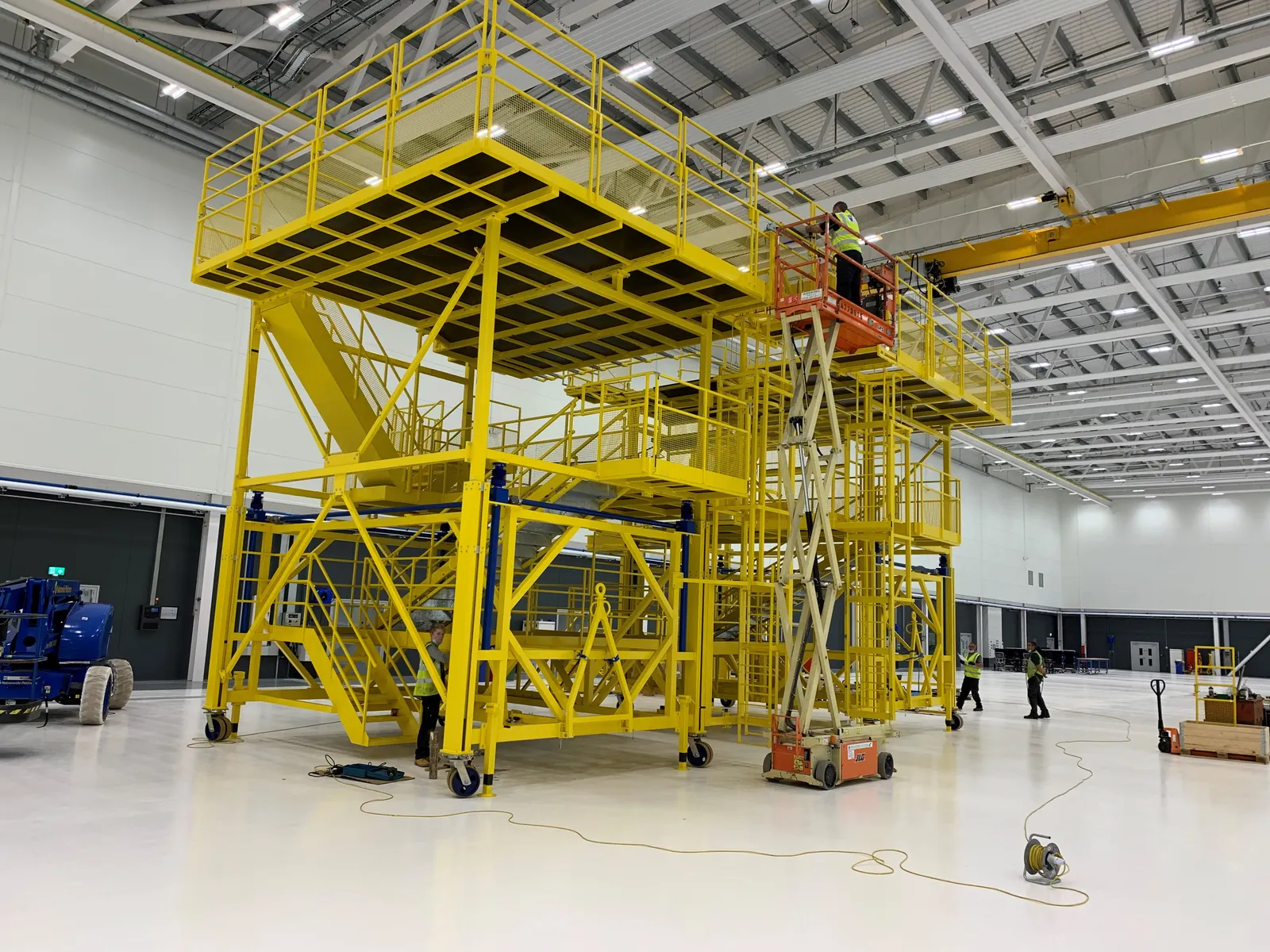
Systems already riding and lifting
Send us the layout of the lifting points and the loads
We will design the jacks, shafts and motor and quote for the complete system.